
The Bowl That Was Mended
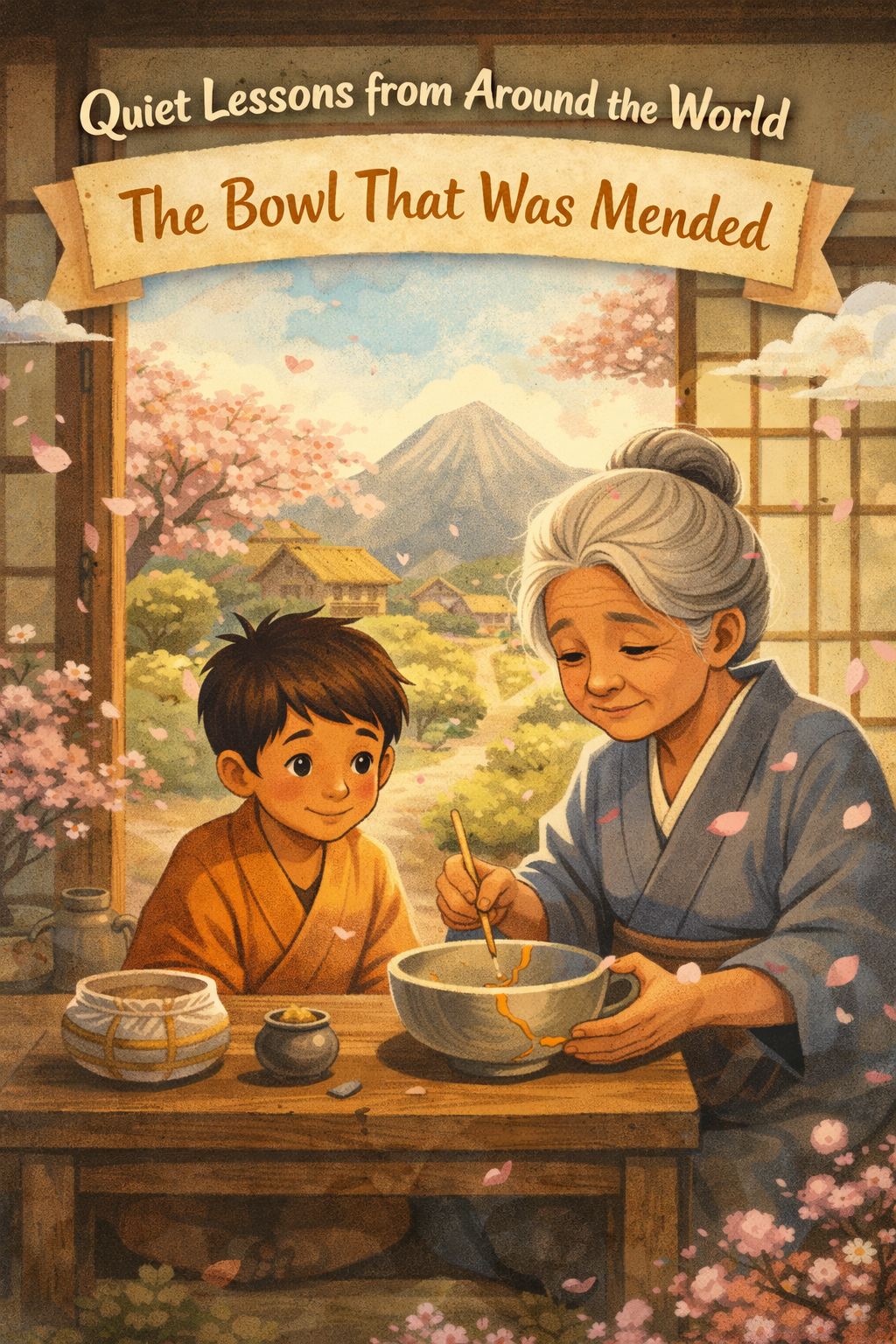
This story comes from a quiet mountain village in Japan, where mornings arrived softly and people believed that even small actions carried meaning.
In that village lived a boy named Hiro. Hiro was gentle and thoughtful, but he had one habit—when something broke, he quickly wanted to replace it.
One afternoon, while helping his grandmother prepare rice, Hiro slipped.
A ceramic bowl fell to the floor and cracked into two pieces.
Hiro froze.
“I’m sorry,” he said quickly. “I’ll throw it away. We can buy a new one.”
His grandmother shook her head.
“No,” she said calmly. “This bowl has shared many meals with us.”
She picked up the pieces carefully.
That evening, instead of throwing the bowl away, she brought out a small box. Inside were thin lines of golden paste. Slowly, patiently, she began mending the bowl.
Hiro watched in silence.
“But it will still be broken,” he said.
“Yes,” his grandmother replied, smiling. “But it will be broken with care.”
The next day, the bowl was whole again. The crack remained—but it shone gently in the light.
At lunchtime, Hiro noticed something strange. Everyone chose that bowl first.
“It looks special,” his sister said.
Hiro touched the warm bowl and felt something new inside his chest.
Days later, at school, a new boy arrived. He spoke little and sat alone. Some children whispered. Some avoided him.
Hiro remembered the bowl.
He walked over and sat beside the new boy. They shared lunch quietly. Words came slowly, but comfort came faster.
That afternoon, Hiro realized something important.
Not everything needs to be replaced.
Some things—and some people—just need care.
Moral woven gently into the story:
What is mended with patience often becomes more valuable than what is new.




Review Quiet Lessons from Around the World Story 2.